
'Those who were first at the site of Gauri Lankesh's murder scene noticed that the place was still open for people to casually walk in and out.' 'No forensic evidence of value can remain in such places,' points out Aakar Patel.

'If Rakesh Sinha introduces the bill, but it does not pass the Rajya Sabha in six years, then the bill will lapse.'

'There are so many dimensions to history that we need to attend to: We need more space for local and regional histories; we need to delve into the histories of particular communities; we need to emphasise gender history and environmental history.' 'We need to think about India's history beyond India's current borders.'
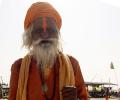
'While India's 'secularism' is a matter of cultural values rooted in Hinduism, the Western concept became one of rights rooted in legal rights. India would be secular with or without Article 25 of the Constitution,' says T V R Shenoy.

Mufti's political graph shows his fondness for courting unpopular, politically hazardous ventures in pursuit of his ultimate objective to vindicate his leadership. Towards the end of his life, Mufti's public profile had come to assume the dimensions of statesmanship. One reason being his willingness to learn from his experience, says Mohammad Sayeed Malik.
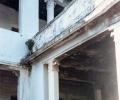
'As I went around Batticaloa, Trincomalee, Jaffna and Mannar, my mind went back to my visit in January 1990 at the fag end of the IPKFs mission in Sri Lanka,' says Colonel Anil A Athale (retd).

When Meenakshi Arvind and Mookambika Rathinam took an epic car journey from Coimbatore to London, they encountered a world that was more good than bad. In the cry for freedom in a dark corner of the globe, they discovered that The Mahatma remained India's greatest icon.

Sardar Vallabhbhai Patel's sage advice remains as relevant today as it was during his lifetime, says Vivek Gumaste.

'In one mansion we visited, I was told the doors in the back courtyard had to be kept closed because to have the front and back doors open at the same time would result in Chettiar wealth flowing away,' notes Rahul Jacob after a memorable visit to Karaikudi.

The DMK combine has won 37 of the 38 LS constituencies in Tamil Nadu, and bagged 13 of the 22 assembly bypolls. What swept away the AIADMK-BJP alliance in the southern state was not dravidian ideology but job loss and graft bias, says N Sathiya Moorthy.
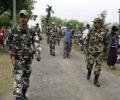
With 32 people being killed in Assam, the Centre on Sunday said it is determined to curb attacks on minorities as the violence there was aimed at starting a "full-fledged communal conflagration".

'If you look at peacekeeping right now, it is fraught with accusations of sexual abuse or peacekeepers involved in deals that are outside their purview, human trafficking.' 'When a contingent of women walk through a camp, the women in the camp and the children respond to them, talk to them. Women are more open to talking about sexual violence and domestic violence to other women.'

If the AAP wins 20 to 40 Lok Sabha seats, which is conceivable unless it botches up on governance in Delhi, it will become a significant bloc comparable in influence to or even bigger than several major regional parties, feels Praful Bidwai.

'This was our country, after all, our India, humara Hindustan -- why would we go anywhere else?'

'I was brought up in a Brahmin Hindu family. I was brought up in places where the majority was Muslim, in Rampur, Uttar Pradesh. There was a mosque next to my house, but I never saw communal tension.' 'I am not worried. This country's religious roots are very strong. They know how to take care of themselves.'

The floods that engulfed the state of Jammu and Kashmir have been unprecedented in its history. In fact, the deluge of rains suffered by the state was at par --- and in some case, far worse --- than what was witnessed in Uttarakhand in June last year.

'The biggest advantage for India was its seasoned and experienced political leadership who had spent decades struggling against the Raj and had spent years behind bars.' 'Not a single prominent leader of the Muslim League spent one day in jail.' 'Gandhiji, Nehru and Sardar Patel were intelligent, shrewd men with their hands on the popular pulse.'

In a speech outlining his foreign policy, Trump did not mention about India, and said that his administration would seek to improve ties with Russia and China.

New Delhi-based Samskrita Bharati has decided to take upon itself the task of cleaning up Indian languages and introducing Sanskrit as the mainstream language. Dinesh Kamath, the organisation's all-Bharat organising secretary, speaks to Vicky Nanjappa about the cause.
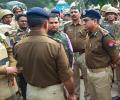
Of the 27 named, at least four are workers and functionaries of right-wing organisations, including the Bajrang Dal, officials said.

'So far the youth were Modi's strength.' 'It now seems under pressure, and for good reason: Crisis in education, jobs, slowdown in manufacturing, and thereby trading,' points out Shekhar Gupta.
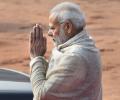
Prime Minister Narendra Modi on range of issues -- from Rafale deal to Ram temple and triple talaq.
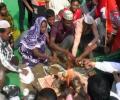
'When Hindus converted through inducements there was no hue and cry, but when reconversions took place, everyone cried foul. If re-conversions are bad, so are conversions.' 'Our government is not getting involved either in conversions or re-conversions. The BJP has nothing to do with it.' Parliamentary Affairs Minister M Venkaiah Naidu in a candid interview.

'People are tense. The morale of the perpetrators of the Kaliachak attack is very high.' 'People there fear that if the arsonists there could burn the police station today, they can burn the courts tomorrow; they will burn the collectorate.'

'The middle class you can hurt anytime. For revenues, politics, pleasure, anything,' notes Shekhar Gupta.

However, the certified copy of the said order was issued by the court only on May 1, 2015.

Meet the Indian-American comedian behind Homecoming King, which has become the toast of Netlix.
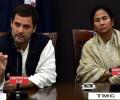
Unfazed by the absence of leaders of the Left, the Janata Dal-United, the Samajwadi Party and the Bahujan Samaj Party, Congress leader Rahul Gandhi and Trinamool Congress chief Mamata Banerjee along with some regional parties on Tuesday sought to put up a united face raising the pitch against demonetisation by demanding the resignation of Prime Minister Narendra Modi.
'Mufti is much more mellowed, much more accommodating. He knows he is stuck and he knows that he cannot retreat now.'

The Group of Minister, set up to look into the bifurcation of Andhra Pradesh, is all set to recommend special status to both the states under Article 371-D of the Constitution and examining a proposal to include two districts of Rayalseema in Telangana.

'Minorities should not fear a Modi sarkar... Who has given the right to kill in the name of religion? No one! You are not James Bond 007, that you will just take a shotgun and kill anybody at your whims and fancies. We are not living in a banana republic...' The inimitable Shatrughan Sinha on Narendra Modi as a dabbang action hero, what a Modi Sarkar would be like.
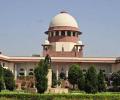
The nullifying of the NJAC Act has put the spotlight on the Judiciary. Concepts like transparency, being open to change, leading from front, management of perceptions that were reserved for the Executive earlier are now relevant for the Judiciary as well, says Sanjeev Nayyar.
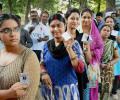
Bihar Chief Minister Nitish Kumar has shown it is possible to form an electoral base with pro-women policies that matter, so why don't other political parties replicate it, asks Devanik Saha.

'Voting also involves communal factors, caste factors and so on, but increasingly, the caste factor is making less and less sense to the Indian voter,' says journalist and author Manu Joseph.
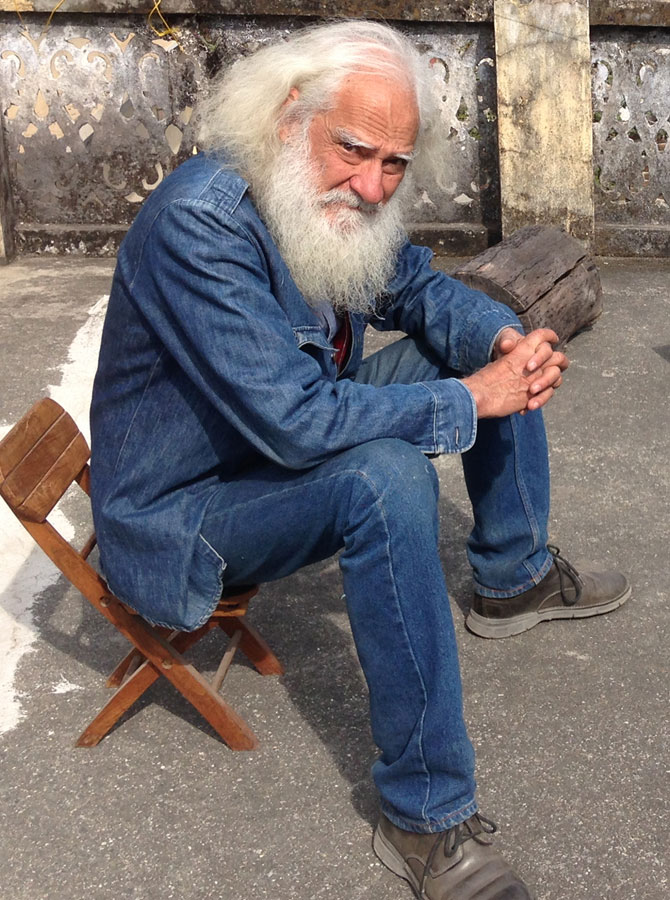
'Not allowing people to speak or listen is the biggest act of anti-nationalism,' says Arvind Krishna Mehrotra, one of India's finest poets.

The ordinary life lived in Pakistan is rarely a part of Indian imagination. This is this gap that Pakistani television serials have succeeded in bridging, says Mohammad Asim Siddiqui.

It is a sight that both warms and breaks the heart. The women of Shaheen Bagh seem oblivious of the cold, these women and their children, the latter ranging in age from 19 days to early teens, who have been occupying the road for over two weeks now. Some of them have not gone home for days, but their faces are clear, unlined by fatigue, their eyes bright and fierce as those of the falcon, shaheen, the area is named for.

What makes The World Before Her stand out is that it has the courage to ask what nobody else does: who is the Modern Indian Woman? Paloma Sharma reviews the film.
'We need to be in a perpetual state of aggression, and able to swiftly change the goal posts to keep Pakistan in a state of imbalance,' argues Sanjeev Nayyar.

'I believe politics was imposed on it by the censor board, when it gave the film's trailer an A certificate, hoping to deny children, teenagers the opportunity to watch it during prime time television shows,' says Aseem Chhabra.
